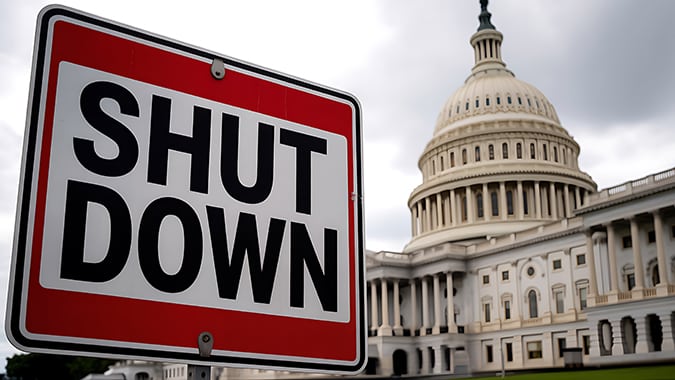
Day 8 of the federal government shutdown on Wednesday saw the impact rippling through the nation’s economy, impacting airports, travelers, federal contractors, and businesses that depend on spending by military and federal workers who are no longer being paid.
U.S. Transportation Secretary Sean Duffy, during a visit to Newark Liberty International Airport earlier this week, said there has been a slight increase in air traffic controllers taking sick days since the federal funding to pay these workers had lapsed. Air traffic controllers are deemed essential workers who are expected to report to work during a shutdown even when there is no federal budget in place to pay them.
Duffy said he was concerned a prolonged government shutdown could lead to an increase in the number of air traffic controllers taking sick days to work side jobs to earn money to pay their bills, and that could exacerbate staffing shortages at airport towers. Duffy said the priority was public safety, so in the event of an uptick in staffing shortages, there would be flight delays and cancellations that disrupt air travel.
On Wednesday, the Federal Aviation Administration’s publicly available airspace status summary said under “forecasted events” that Newark Liberty International Airport and LaGuardia Airport in New York City are among several major U.S. airports that could experience ground delays or stoppages at various points through the evening. The advisory did not state the reason.
Beyond the delays at airports, U.S. international travelers are looking at delays in obtaining their passports. According to the U.S. Chamber of Commerce, past federal government shutdowns led to a backlog of hundreds of thousands of U.S. passport applications going unprocessed, impacting travelers, airlines and tourism-related businesses.
Companies that do business with the U.S. government are being told the federal government cannot award contracts, modify them, or exercise options during a government shutdown. The actual work under existing contracts is expected to continue unless the contracting officer terminates the contract or puts it on a stop-work status.
Most of the more than 4 million people in the U.S. military and federal workforce no longer are paid during a government shutdown and this has a ripple effect on businesses – especially those in communities with a large military or federal government presence – because military personnel and federal workers without pay cut back on their spending.
According to a Sept. 30 letter that the U.S. Chamber of Commerce sent to the U.S. Senate, the last government shutdown, which lasted 35 days from December 2018 to January 2019, reduced U.S. economic output by $11 billion in the following two quarters, including $3 billion the U.S. economy never regained.