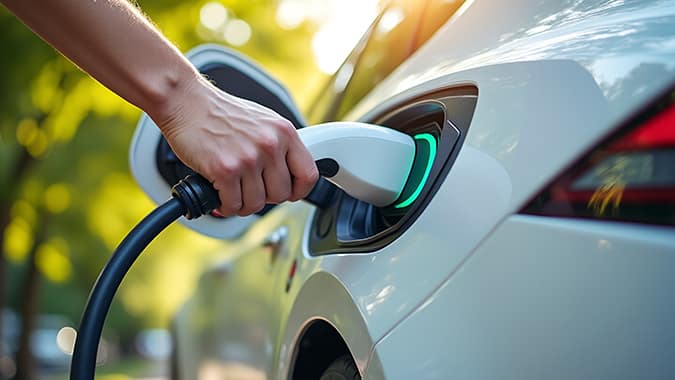
Gov. Phil Murphy on Tuesday announced New Jersey has reached a new electric vehicle (EV) milestone exceeding 250,000 registrations, which he said reflects increasing consumer confidence in EV reliability as well as the availability of accessible charging infrastructure.
“Over the course of my administration, our policies have taken driving electric from a futuristic concept to a practical choice for drivers – reflected by the exponential growth in registrations,” Murphy said. “By continuing to expand charging infrastructure and cater to consumer preferences by incentivizing electric vehicle purchases, we will reduce the impact of cumulative transportation emissions on our climate for future generations.”
The Murphy administration said there are more than 254,444 EVs now registered with the New Jersey Motor Vehicle Commission, marking a significant jump in the number of EVs registered in the state compared to just three years ago.
There are over 1,700 fast charging ports and 3,300 Level 2 charging ports that are publicly available across New Jersey, with several hundred new ones being added every year.
NJBIA supports efforts to incentivize consumers to transition to electric vehicles, however, the association opposes any effort to mandate EVs or outlaw the purchase of vehicles with gasoline-powered engines.
NJBIA Deputy Chief Government Affairs Officer Ray Cantor also noted that all the gains announced by Murphy today were done without mandates on what kind of automobile someone must drive.
The Fuel Merchants Association of New Jersey threw cold water on the Murphy administration’s consumer confidence claim, pointing out that hybrid vehicles that run on an electric motor but are powered by gasoline, still outsold EVs during this period by 16%.
“The Governor crows about 'consumer confidence' in electric vehicles (EV) by citing the increased number of EVs registered since December 2024,” said Eric DeGesero, executive vice president of the Fuel Merchants Association of New Jersey.
“This includes battery electric vehicles (BEV) that use no gasoline and plug-in hybrids (PHEV) which use some gasoline but are primarily powered by electricity. He failed to mention that sales of hybrids – cars that run on an electric motor powered by gasoline and have no plug – outsold BEVs during this same period by 16%."
Hybrid electric vehicles (HEV) use a combination of a gasoline engine and an electric motor, with its battery automatically charged by the engine or regenerative braking, so it never needs to be plugged in. A plug-in hybrid electric vehicle (PHEV) has a larger battery that can be externally charged, allowing a longer all-electric driving range before the gas engine takes over. BEV vehicles run purely on an electric-powered battery and need to be plugged in to charge.
DeGesero said that as of June 30, 2025, New Jersey has registered 217,989 hybrids; 189,603 BEVs; and 55,858 PHEVs.
“It appears consumers aren’t as confident in EVs as the Governor contends,” DeGesero said in a statement released Tuesday.