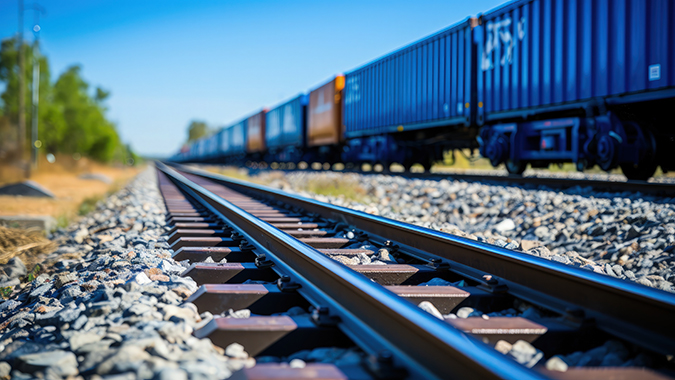
NJBIA, the New Jersey State Chamber of Commerce and the Chemistry Council of New Jersey have asked Gov. Phil Murphy to veto or not sign into law a bill that would impose duplicative and potentially harmful requires on the railroad freight industry in New Jersey.
Bill S-3389 (Diegnan, D-18; Mukherji, D-32) purports to increase freight rail safety, but also imposes requirements that the groups said would “undermine and not enhance” safety by imposing arbitrary mandates that “fail to reflect modern railroad operations and technological investments.”
The bill awaits a decision by the governor before he leaves office later this month.
“Rail safety is critically important, and we welcome thoughtful engagement on this issue,” the groups wrote in a letter this week. “(But) provisions such as rigid train-length limitations and mandated crew sizes would significantly increase operational costs and require trains to be broken up at New Jersey’s borders.
“These disruptions would heighten safety risks, delay freight movement, and impair supply chains that are essential to New Jersey’s economy, including those supporting energy production, chemical manufacturing, agriculture, and consumer goods.
“Ultimately, these costs would be passed on to businesses and communities across the state,” the business groups wrote.
The bill includes a two-person crew requirement when a train is transporting one or more loaded freight cars containing any material poisonous by inhalation or transporting 10 or more loaded freight cars or freight cars loaded with bulk packages or containing certain hazardous materials.
“Many of these matters are already governed by comprehensive federal regulations and are subject to federal preemption,” the groups wrote. “As a result, Senate Bill No. 3389 would create regulatory uncertainty, invite legal challenges, and complicate compliance efforts.
“In addition, the bill’s labor-related provisions risk generating confusion rather than clarity in safety oversight and enforcement.
“These concerns are particularly significant given New Jersey’s role as a national logistics hub. The Port of New York and New Jersey is the largest port on the East Coast and among the busiest in the nation,” they said.
To view the full letter by NJBIA, the State Chamber of Commerce and the Chemistry Council of New Jersey, click here.