
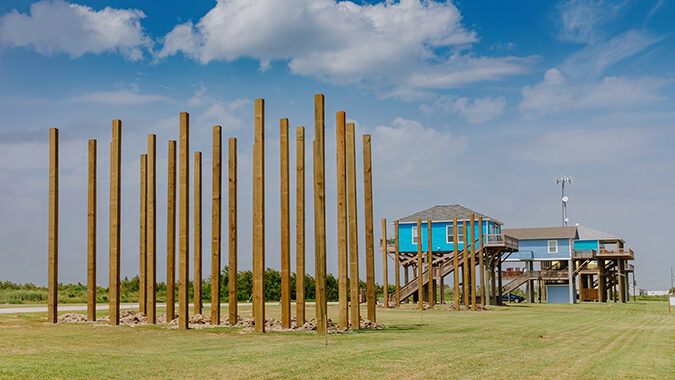
In the last hours of the Murphy administration, the state finalized contentious regulations that require buildings in coastal and flood-prone areas of the state to be built 4 feet higher than now required in a move that NJBIA said will make construction projects more difficult and costly.
The Department of Environmental Protection officially adopted its NJ Protection Against Climate Threats Resilient Environments and Landscape (NJPACT REAL) Rules on Tuesday – Gov. Phil Murphy’s last day in office. Back in 2024, DEP had originally proposed increasing the building elevation standard by 5 feet, only to change the proposal last year to 4 feet after pushback from NJBIA and others who said the rules ignored the latest climate change science.
NJBIA Deputy Chief Government Affairs Officer Ray Cantor said that despite last year’s amendments to the NJPACT REAL rules, the regulations will still wreak havoc on economic development in the state by causing permitting delays and that will add time and costs to construction projects. The impact will affect everything from new housing to urban revitalization to the construction of sorely needed energy generation facilities, he said.
“Our new governor Mikie Sherrill, by her executive orders, has made it clear that permitting reform and government efficiency are priorities, but these DEP rules implemented by the prior administration are going to undermine her efforts,” Cantor said.
“You can’t move New Jersey forward with a regulatory framework that holds the state back,” Cantor said. “Beginning this summer, obtaining permits for construction projects affected by these new rules will be even more difficult and expensive, which will hurt New Jersey’s economy and exacerbate the state’s affordability issues.
“We look forward to working with the new Sherrill administration to change this rule,” Cantor said.
The NJPACT REAL rules raise elevation requirements in designated areas of the state, expand flood maps, create new wetland protection and stormwater management rules, and place limits on construction in flood-prone areas, among dozens of other changes.
The regulations, which apply to both new construction and existing buildings that will undergo substantial renovation, take effect on July 20. Until that time, developers may continue to submit permit applications under the previous regulatory standards.